
Review · NORWAY
Andenes: Responsible Whale Watching with Classic Catamaran
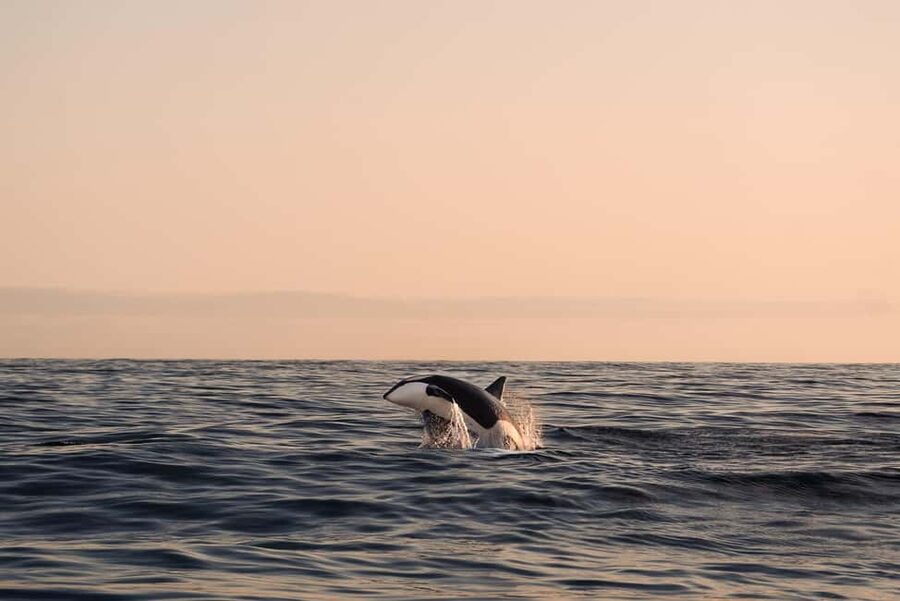
The best moment here is the one you cannot schedule: a whale surfacing beside the boat, its dark back appearing for a few seconds in the cold Arctic sea. From Andenes, you search open waters with local crew and marine biologists who explain whale behavior as conditions and recent sightings guide the route.
I like the Whale Pass, which gives you a free second chance if no whales or dolphins appear. I also like the practical setup: a stable catamaran, an outdoor viewing deck, and a heated cabin with soup, coffee, tea, and biscuits. The main catch is the sea itself. Rough water can make the ride uncomfortable, and the English commentary may come quickly if you are not confident in English.
Key points before you book
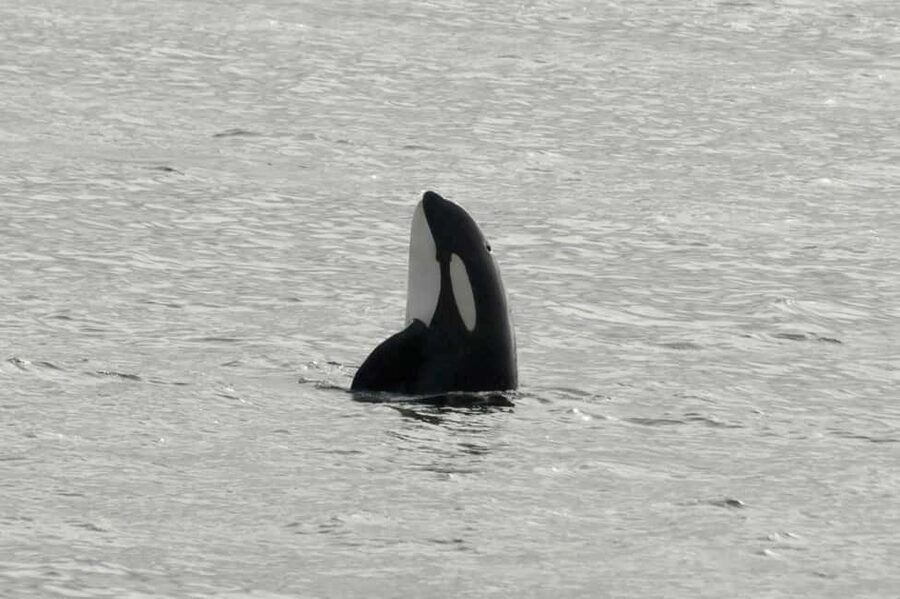
- Whales are wild, not scheduled: The crew searches for sperm whales, orcas, dolphins, and seabirds, but sightings depend on wildlife movement and sea conditions.
- A free second chance is included: If no whales or dolphins are seen, the Whale Pass lets you rebook at no extra charge, subject to availability.
- Plan on three to five hours: The advertised duration is four hours, but the outing can run shorter or longer depending on weather and animal activity.
- The boat has a useful indoor refuge: You can warm up with soup and hot drinks in a heated cabin between periods outside.
- Check-in is at Østre Havn: Look for the black reception container beside the large red harbor buildings near the Andenes-Gryllefjord ferry.
- Come prepared for motion: Warm layers, waterproof shoes, gloves, rain gear, and seasickness prevention are not optional luxuries here.
Starting at Andenes Harbor
Your day begins at Østre Havn in Andenes, on the northern tip of Andøya in Nordland County. Find the black reception container beside the large red harbor buildings. An Arctic Whale Tours sign is posted on the red harbor building, and the meeting point is close to the Andenes-Gryllefjord ferry.
You need to check in one hour before departure, not just a few minutes before the boat leaves. Parking is available a short distance from the reception, but spaces are first come, first served. Transportation to the harbor is not included, so you need to arrange your own way there.
The early check-in gives the crew time to organize the group and cover safety rules. A minimum of 15 participants is required for the tour to depart, and bad weather can lead to a short-notice cancellation or change. That may be inconvenient if your schedule is tight, so I would avoid booking this as your only fixed activity in Andenes.
The boat is a classic catamaran designed for stability and wildlife viewing. You receive safety equipment and a life vest, then choose between the outdoor viewing deck and the heated indoor seating area. The catamaran is not a private charter, so expect to share the space with other people, particularly during busy periods.
More Catamaran Whale and Dolphin Watching in the world:
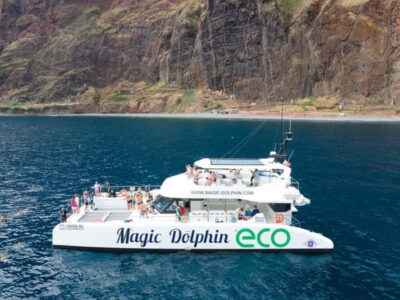
- From Funchal: Ecological Catamaran Dolphin Whale Watching
★ 4.5 · 8,204 reviews - Funchal: Dolphin and Whale Watching Catamaran Cruise
★ 4.5 · 5,697 reviews - Gran Canaria: Catamaran Dolphin Watch Cruise with Snorkeling
★ 4.4 · 4,761 reviews
Out into the Arctic sea
Once the boat leaves the harbor, the experience becomes a search rather than a set route. The crew uses recent sighting information, whale movement, and sea conditions to decide where to go. That means the exact journey changes from day to day.
This is important to understand before you book. You are not heading to a fixed enclosure or a guaranteed viewing point. You are going into a working marine environment where animals may surface briefly, move away, or remain below the water for long stretches.
The guides explain the local ecosystem, whale behavior, and the rules behind responsible wildlife watching. The goal is to watch without touching, chasing, or disturbing marine life. Drones are not allowed, and you should expect the crew to put animal welfare ahead of getting the closest possible photograph.
The open deck is the place to watch for a sudden blow, a fin, or a dark back cutting through the water. Keep your binoculars ready, but do not rely on them alone. A whale can surface close to the boat and disappear before you have time to raise your camera.
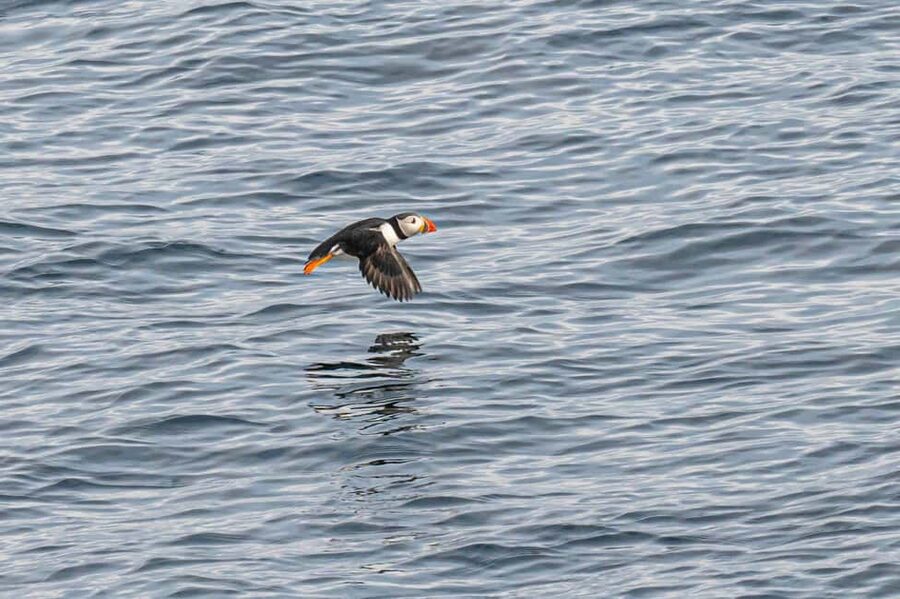
You can also look for dolphins, orcas, and seabirds. Puffins and sea eagles are among the birds named for this route. The wildlife list is broad, but it is not a promise that you will see every species. The crew searches for what is active on that day.
Sperm whales, orcas, and the value of patience
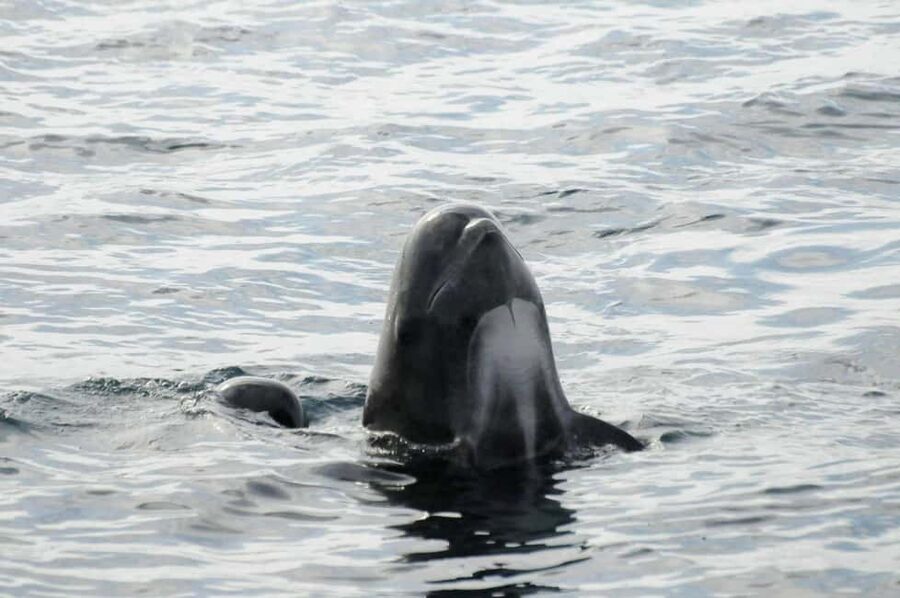
The main attraction is the chance to see a sperm whale. These are powerful animals, and even a brief appearance can be memorable. You might see only part of the back or a blow before the whale slips beneath the surface. That fleeting quality is part of the experience, but it can test your patience.
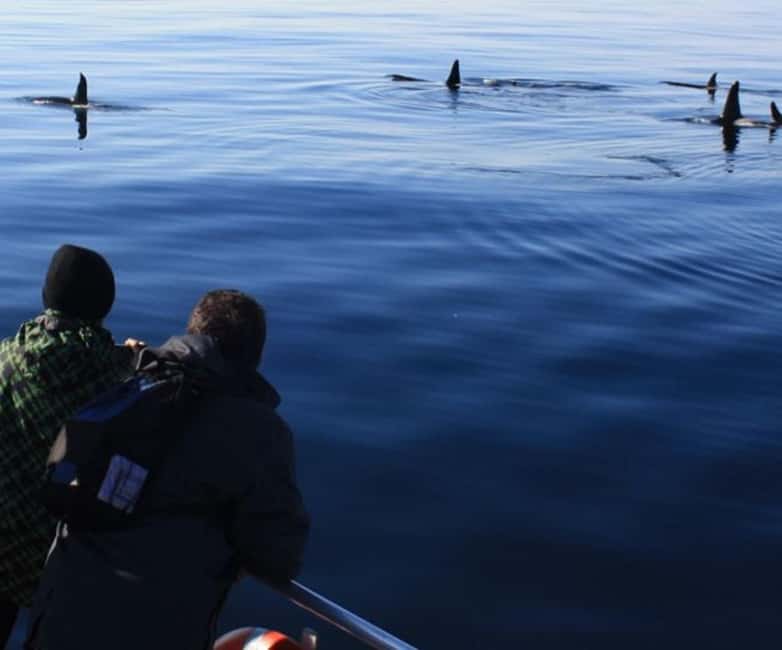
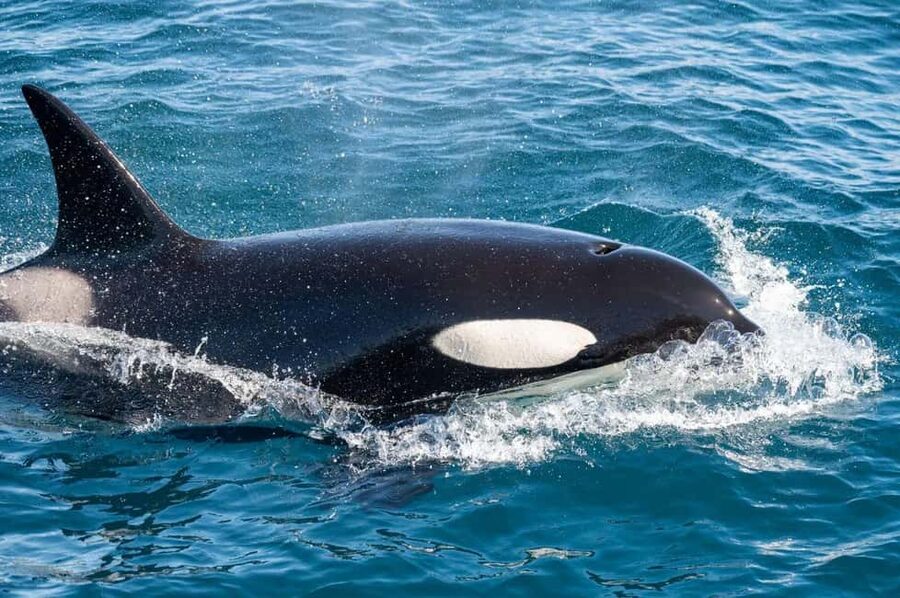
Orcas and dolphins bring a different kind of sighting. Pods can be active and easy to follow for a time, but their movements are still unpredictable. The crew may need to adjust the route as news of recent activity changes or as the sea makes one area safer than another.
A marine biologist or local guide provides commentary during the trip. The explanations add value because they help you understand what you are seeing instead of treating each appearance as a quick photo opportunity. One useful point from the experience is that the commentary is in English, and one French-speaking visitor found that a guide speaking quickly made it hard to follow. If English is not your strongest language, ask for clarification when you need it.
The guides have also been praised for their subject knowledge and calm work in rough conditions. A French guide was especially helpful to one French-speaking participant, though no regular guide names are provided. That suggests the staff may vary, so do not book on the expectation of a particular person.
A heated cabin, soup, and rough-water reality
The heated cabin is more than a minor comfort. Northern Norway can feel cold even when the sky is clear, and the wind on an open deck can quickly cut through light clothing. You can step inside, warm up, and continue watching when conditions improve.
Onboard food includes hot soup, fresh bread, tea, coffee, and biscuits. This is a light meal, not a full restaurant lunch. One person found the vegetable soup rather instant and suggested the food could be improved. I would treat it as welcome fuel during a long outing, not a reason to choose this tour.
Sea conditions matter more than the soup. One outing in late September had calm weather and sunshine, while another in early October faced rough water but still produced sightings of three whales. The contrast tells you what to expect: the trip can deliver wildlife in unsettled conditions, but your comfort is less certain.
If you are prone to seasickness, take preventive medication before departure and bring whatever personal supplies you normally use. The tour is specifically not recommended for people who are prone to seasickness. Babies under one year, pregnant women, and people with mobility impairments are also listed as unsuitable for this activity.
Wear thermal clothing under warm outer layers. Add a hat, gloves, rain gear, and waterproof shoes. You may spend time moving between the deck and cabin, and wet clothing will make the return journey unpleasant. Oversize luggage is not allowed, so bring only what you can manage easily.
More Catamaran Cruises in the world:
- Palma de Mallorca: 5-Hour Catamaran Cruise with Lunch & Swim
★ 4.5 · 9,957 reviews - Malaga: Catamaran Sailing Trip with Sunset Option
★ 4.4 · 8,613 reviews - Barcelona: Daytime or Sunset Catamaran Cruise with Music
★ 4.3 · 5,923 reviews - Santorini: Catamaran Tour with BBQ Dinner, Drinks, and Music
★ 4.6 · 5,886 reviews
Responsible viewing from a working boat
The responsible-wildlife approach is one of the strongest parts of this trip. The crew discusses whale behavior and marine protection while taking you to areas where sightings have recently been reported. You are asked not to touch marine life, and alcohol, drugs, smoking, and drones are prohibited.
Those rules are practical rather than fussy. A drone can disturb animals and distract people who are trying to watch from the deck. Touching wildlife is unsafe for both you and the animal. Keeping the boat quiet and controlled gives the crew a better chance of observing natural behavior.
The catamaran offers a good balance between access and shelter. You have a deck for sightlines and an indoor area when the weather turns unpleasant. It is not a luxury yacht, and the boat ride itself may feel long if wildlife activity is limited, but the arrangement works for a four-hour search in cold water.
Families can take part, though parents should consider the cold, the length of the outing, and the possibility of rough seas. The activity is also suited to photographers, but patience matters more than equipment. A fast camera, waterproof protection, and spare batteries are more useful than carrying bulky gear.
What the Whale Pass really gives you
The Whale Pass is a strong safeguard, but it is not a guarantee of a whale on your preferred date. If no whales or dolphins are seen, you can join another tour free of charge, subject to availability.
That policy matters because wildlife sightings are never fully controlled. It reduces the financial sting of an empty trip, especially if you are staying in Andenes for several days. It helps less if you are driving through the region on a fixed timetable and cannot return.
Before booking, check your own schedule. If you can spare another morning or afternoon, the pass adds real value. If you leave Andenes immediately after the trip, it becomes more of a safety promise than a practical second chance.
The policy also makes the tour a better choice for people who understand that responsible wildlife watching involves uncertainty. The boat does not simply produce animals on demand. You pay for expert searching, time at sea, and the possibility of a close encounter, with rebooking protection if the search comes up empty.
Is $183 a fair price?
At $183 per person, this is a substantial half-day expense. The price includes the whale-watching trip, local crew, marine biologists, safety equipment, the heated cabin, the outdoor deck, and hot soup with drinks. Transportation to the harbor, insurance, seasickness medication, and personal expenses cost extra.
I see the value in the guide team and the Whale Pass. A free rebooking can be meaningful in a place where weather and wildlife change quickly. The heated cabin also makes the price easier to accept than a basic open-boat outing, particularly for a tour lasting up to five hours.
Still, the cost does not buy certainty. You can spend several hours searching and see little, especially if conditions are poor. The soup is simple, and the tour is in English, which may limit the value of the commentary for some people.
I would book it if seeing Arctic wildlife is one of the main reasons you are in Andenes and you can accept nature’s timetable. I would think twice if you want guaranteed close views, dislike boats, or have only a short window before leaving town.
Timing, language, and practical planning
The stated duration is four hours, but the real range is three to five hours. Wildlife activity, weather, and the location of whales determine how long the boat remains at sea. Do not schedule a tight connection immediately after the tour.
The live guide language is English. The staff includes marine professionals and local crew, and the commentary covers the ecosystem, whale behavior, and responsible viewing. If you need slower explanations, ask early rather than letting the entire trip pass in confusion.
Free cancellation is available up to 24 hours before departure, and you can reserve now and pay later. Those terms give you some flexibility, but the weather can still change the plan after you have arranged everything. Keep a spare indoor activity available in Andenes in case the sea wins.
The tour does not suit wheelchair users without advance discussion. You are asked to notify the operator in advance if you use a wheelchair or travel with a service animal. Mobility limitations are listed among the reasons the activity may not be suitable.
Who should book this Andenes whale safari?
You should consider this tour if you want:
- A serious search for whales with marine-focused commentary
- A chance to see sperm whales, orcas, dolphins, puffins, or sea eagles
- The security of a free rebooking option if no whales or dolphins appear
- A boat with both an outdoor viewing area and heated indoor seating
- A family-friendly Arctic activity, provided everyone handles cold and sea motion well
- A meaningful wildlife outing rather than a guaranteed photo stop
You may prefer another plan if you get seasick, need guaranteed accessibility, dislike cold weather, or cannot return for a second attempt. You also need to be comfortable with English commentary and a schedule that may stretch from three to five hours.
Should you book it?
Book this Andenes whale safari if you want to search for wild marine life in a responsible way and can give the sea time to cooperate. The strongest reasons are the experienced marine team, the heated cabin, the useful meal break, and the Whale Pass.
Go in with realistic expectations. You may see three whales in rough water, as one outing did, or you may spend much of the trip scanning empty water. That uncertainty is not a flaw in the natural world, but it is a real part of what you are paying for.
FAQ
Where does the whale-watching tour depart from?
Meet at the black reception container at Østre Havn in Andenes, beside the large red harbor buildings. The meeting point is near the Andenes-Gryllefjord ferry, and you should look for the Arctic Whale Tours sign.
How long does the tour last?
The advertised duration is four hours, but the outing can last from three to five hours. Weather, sea conditions, and whale location affect the exact return time.
What animals might I see?
The search focuses on whales, including sperm whales and orcas, as well as dolphins. You may also see seabirds such as puffins and sea eagles.
What happens if no whales or dolphins are seen?
The Whale Pass allows you to rebook another tour free of charge if no whales or dolphins are seen. Rebooking is subject to availability.
Is food included?
Yes. The tour includes hot soup, fresh bread, tea, coffee, and biscuits. The food is served in the heated indoor cabin.
Is the tour conducted in English?
Yes. The listed live tour language is English.
What should I wear and bring?
Bring warm or thermal clothing, a hat, gloves, rain gear, waterproof shoes, and motion sickness prevention if needed. Binoculars are also recommended.
Can I cancel the booking?
You can cancel up to 24 hours before departure for a full refund. You can also reserve now and pay later, which keeps your plans more flexible.
New on the water in the world
- Barcelona: Catamaran trip to the Congost de Mont-rebei★ 5.0 · 21 reviews
- Barbate: Strait Natural Park & Baelo Claudia Catamaran★ 4.6 · 3 reviews
- Barcelona: AFTERWORK Catamaran Cruise w/ Music & Drinks★ 4.8 · 8 reviews
- Barcelona: Private Catamaran Sailing with Drinks and Snacks★ 5.0 · 11 reviews
- Athens Riviera Private Catamaran Cruise with Meal and Drinks★ 5.0 · 7 reviews
- Ayia Napa: Afternoon Catamaran Cruise with Lunch & Open Bar★ 4.8 · 23 reviews
- Baden: Gulf of Morbihan Exploration by Catamaran★ 4.7 · 114 reviews
- Altea: Catamaran Party Boat★ 3.8 · 9 reviews
Catamaran Whale & Dolphin Watching, side by side.
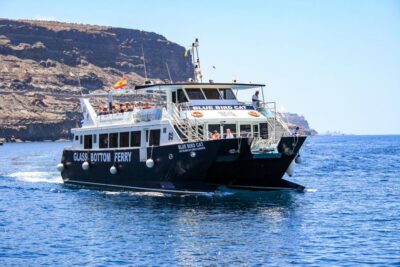
Catamaran Dolphin Watch Cruise with Snorkeling
Read our review →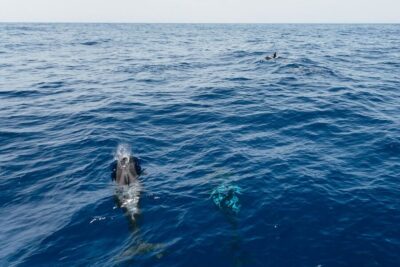
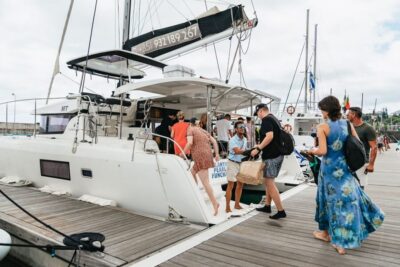
Funchal Bay: Dolphin & Whale Watch Luxury Catamaran Cruise
Read our review →
Dolphin Catamaran Snorkel and Sail with Open Bar
Read our review →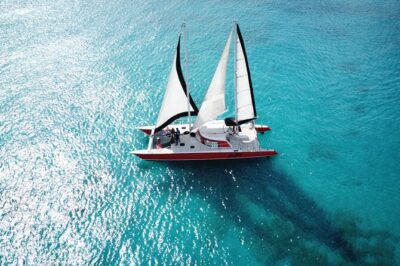
Barbados Catamaran Turtle and Shipwreck Snorkeling Cruise
Read our review →
Waikiki Catamaran Snorkel Sail with Lunch: Turtles Guaranteed
Read our review →Lists this catamaran appears in